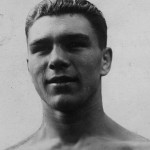
Max Baer: The Livermore Larupper
Quick Facts
- Full Name: Maximilian Adelbert Baer
- Nickname: “The Livermore Larupper”
- Born: February 11, 1909
- Died: November 21, 1959
- Birthplace: Omaha, Nebraska, United States
- Height: 6’2½” (189 cm)
- Reach: 81″ (206 cm)
- Weight Class(es): Heavyweight
- Stance: Orthodox
- Professional Career: 1929–1941
- Record: 68-13 with 51 KOs
- Major Achievement: World Heavyweight Champion
- Hall of Fame: Inaugural class of 1995
Max Baer was one of the most powerful, charismatic and complicated heavyweight champions of the 1930s.
Nicknamed the “Livermore Larupper,” Baer possessed a devastating right hand and the natural physical ability to compete with virtually any heavyweight of his era. He defeated former champion Max Schmeling, battered Primo Carnera to win the world heavyweight championship, and later shared the ring with James J. Braddock and Joe Louis.
Modern audiences also know Baer through the film Cinderella Man, which portrayed him as the menacing champion standing between Braddock and one of boxing history’s greatest upsets. The real Max Baer was considerably more complicated than the movie character.
Career Snapshot
Baer turned professional in 1929 and quickly developed a reputation as one of boxing’s most dangerous punchers.
His enormous right hand could end fights suddenly, but Baer was never defined solely by his power. He was athletic, physically strong and remarkably durable during his prime.
His personality was equally memorable.
Baer frequently joked, clowned and entertained crowds, sometimes carrying that behavior into the ring. The same charisma that made him a major attraction could also work against him when his concentration and conditioning failed to match his physical gifts.
By 1933, Baer had developed into a legitimate heavyweight contender.
His breakthrough came against former heavyweight champion Max Schmeling.
Baer stopped Schmeling in the 10th round, establishing himself as one of the leading heavyweights in the world.
One year later, he challenged Primo Carnera for the heavyweight championship.
Carnera repeatedly hit the canvas before the fight was stopped in the 11th round.
Max Baer was heavyweight champion of the world.
Career Highlights
- World Heavyweight Champion from 1934–1935
- Knocked out Max Schmeling in 1933
- Stopped Primo Carnera to win the heavyweight championship
- Recorded 51 knockouts in 68 professional victories
- Lost the heavyweight championship to James J. Braddock in one of boxing’s great upsets
- Fought rising heavyweight superstar Joe Louis in 1935
- Became one of boxing’s biggest personalities during the 1930s
- Inducted into the International Boxing Hall of Fame in 1995
Best Fights
Best Win: Max Schmeling
Baer faced former heavyweight champion Max Schmeling on June 8, 1933.
Schmeling had recently lost the championship to Jack Sharkey but remained one of the leading heavyweights in the world.
Baer’s power and aggression gradually overwhelmed the former champion.
He stopped Schmeling in the 10th round.
The victory transformed Baer from a dangerous contender into a leading challenger for the heavyweight championship.
Best Fight: Primo Carnera
Baer challenged Primo Carnera for the world heavyweight championship on June 14, 1934.
Carnera possessed enormous physical dimensions, but Baer immediately demonstrated that size alone would not determine the fight.
The contest became chaotic.
Carnera repeatedly went down as Baer attacked with his powerful right hand. Some of the trips to the canvas involved awkward wrestling and slips, but the punishment was unmistakable.
The fight was finally stopped in the 11th round.
Baer had become heavyweight champion.
Most Famous Loss: James J. Braddock
Baer entered his June 13, 1935 title defense against James J. Braddock as an overwhelming favorite.
Braddock had resurrected a career that appeared nearly finished, but few expected him to defeat the powerful champion.
Baer struggled to establish his right hand while Braddock boxed with discipline and consistency.
After 15 rounds, Braddock won the decision and the heavyweight championship.
The upset became the defining moment of Braddock’s career and decades later formed the centerpiece of Cinderella Man.
Most Underrated Performance: Ernie Schaaf
Baer faced highly regarded heavyweight contender Ernie Schaaf in 1932.
The fight demonstrated Baer’s dangerous combination of size, physical strength and punching power.
Baer hurt Schaaf badly late in the contest and won the decision.
The fight later became controversial because Schaaf died after fighting Primo Carnera several months later. Speculation developed that punishment from the Baer fight had contributed to Schaaf’s decline, but that is different from saying Baer killed Schaaf in the ring.
That distinction is important when discussing Baer’s career.
Boxing Style & Skill Breakdown
Baer was an explosive heavyweight puncher whose greatest weapon was a tremendous right hand.
At his best, his physical gifts made him extraordinarily dangerous.
At his worst, Baer could become undisciplined, neglect his fundamentals and rely too heavily on his natural power.
Strengths
Right-Hand Power
Baer’s right hand was one of the signature punches of heavyweight boxing during the 1930s.
He could generate enormous force and often threw it with little concern for what came back.
Physical Strength
Baer was a large and exceptionally strong heavyweight for his era.
His physicality was evident against Carnera, where Baer repeatedly disrupted and overwhelmed a much larger opponent.
Durability
Baer possessed an excellent chin during his prime.
He could absorb hard punches and remain dangerous, which encouraged the aggressive and sometimes reckless style that made him exciting.
Athleticism
For a large heavyweight, Baer moved well and possessed considerable natural athletic ability.
His physical talent allowed him to succeed even when his technique was less polished than that of more disciplined opponents.
Intimidation
Baer’s punching reputation mattered before the opening bell.
Opponents understood that one clean right hand could dramatically change a fight.
Weaknesses
Baer’s greatest weakness was inconsistency.
His technical discipline did not always equal his physical talent.
His wide punches could leave openings, and his tendency to clown sometimes interfered with his concentration.
Conditioning and preparation could also fluctuate.
Against Braddock, Baer struggled to solve a disciplined opponent who refused to be intimidated and consistently made him miss.
Against Joe Louis, Baer encountered a younger puncher whose shorter, faster and more technically precise combinations exposed the difference between raw power and refined punching technique.
Style Matchups
Baer was terrifying against opponents willing to trade with him.
His power, durability and physical strength made prolonged exchanges extremely dangerous.
Disciplined boxers presented a different problem.
Opponents capable of controlling distance, avoiding his right hand and forcing Baer to reset could exploit his technical inconsistencies.
Physical Attributes & Ring IQ
Baer stood approximately 6’2½” (189 cm) with an 81″ (206 cm) reach.
He had the frame and reach of a large heavyweight for his era and carried considerable natural punching power.
Baer’s ring intelligence is harder to characterize than that of highly systematic fighters such as Max Schmeling.
He could recognize opportunities and was capable of effective boxing, but discipline was not always his defining characteristic.
His best performances demonstrated what happened when his physical gifts and focus aligned.
His losses demonstrated how vulnerable he could become when they did not.
Max Baer vs. Max Schmeling
Baer’s victory over Max Schmeling was one of the most important performances of his career.
Schmeling was a former heavyweight champion and highly skilled counterpuncher.
Baer wore a Star of David on his trunks for the fight. Baer had Jewish ancestry on his father’s side, although he was not raised in the Jewish faith.
The political environment surrounding Schmeling’s native Germany added another dimension to the contest.
Inside the ring, Baer produced the performance that mattered most.
He stopped Schmeling in the 10th round and established himself as an elite heavyweight contender.
Max Baer vs. Primo Carnera
Primo Carnera entered his 1934 fight with Baer as heavyweight champion.
Carnera was enormous even by heavyweight standards, but Baer refused to be intimidated by his size.
Baer repeatedly hurt and dropped the champion during an unusually physical fight.
The contest ended in the 11th round with Baer winning the world heavyweight championship.
His reign would last almost exactly one year.
Max Baer vs. James J. Braddock
Baer’s fight against James J. Braddock became one of the most famous heavyweight upsets ever.
Braddock had endured years of losses, injuries and financial hardship before unexpectedly fighting his way back into contention during the Great Depression.
Baer was the defending heavyweight champion and a heavy favorite.
Braddock refused to fight Baer’s fight.
He used movement, a consistent jab and disciplined boxing while avoiding many of Baer’s biggest punches.
After 15 rounds, Braddock won the decision and became heavyweight champion.
The remarkable comeback earned Braddock the nickname “Cinderella Man.”
Was Max Baer Really Like the Villain in Cinderella Man?
The 2005 film Cinderella Man introduced Max Baer to millions of people who had never seen him fight.
But the film’s Baer is a dramatized character rather than a complete historical portrait.
The movie emphasizes Baer’s dangerous reputation and portrays him as callous about the possibility of seriously injuring or killing opponents.
The real story is more complicated.
Baer certainly cultivated a flamboyant, intimidating public persona. He was also a devastating puncher, and one opponent, Frankie Campbell, died following injuries sustained in a fight with him.
But historical accounts describe Campbell’s death as having a profound effect on Baer.
Baer was not simply the remorseless killer suggested by the movie portrayal.
That distinction is particularly important because Cinderella Man remains one of the primary ways modern audiences encounter Max Baer.
Did Max Baer Kill Someone in the Ring?
Yes, but this subject requires context.
Baer fought Frankie Campbell in San Francisco on August 25, 1930.
Campbell suffered severe injuries during the fight and died afterward.
His death deeply affected Baer and remained associated with him for the rest of his career.
Another boxer, Ernie Schaaf, is sometimes incorrectly added to the story as a second fighter Baer killed.
Baer defeated Schaaf in 1932 and badly hurt him late in their fight.
Schaaf subsequently returned to competition.
Months later, he fought Primo Carnera and died following injuries sustained in that contest. Speculation persisted that the earlier Baer fight may have contributed to Schaaf’s condition, but Schaaf did not die after fighting Baer.
So the historically accurate distinction is important:
Frankie Campbell died following his fight with Max Baer. Ernie Schaaf died following his later fight with Primo Carnera.
Max Baer vs. Joe Louis
Baer faced undefeated rising star Joe Louis on September 24, 1935.
It was only three months after Baer had lost his heavyweight championship to Braddock.
Despite the loss, Baer remained one of the most dangerous heavyweights in boxing, and the matchup attracted an enormous crowd to Yankee Stadium.
Louis was simply too sharp.
His punches were shorter and more accurate than Baer’s wide attacks, and he repeatedly beat the former champion to the target.
Louis stopped Baer in the fourth round.
It was the first knockout defeat of Baer’s professional career.
The victory helped establish Louis as the leading young force in heavyweight boxing.
Max Baer and the Death of Frankie Campbell
The Frankie Campbell fight became one of the darkest events of Baer’s life.
Campbell died from injuries sustained during their 1930 contest.
The tragedy followed Baer throughout his career and contributed to the public perception of his extraordinary punching power.
But it also complicates the image of Baer as an uncaring destroyer.
Accounts of Baer’s life describe a fighter deeply affected by Campbell’s death rather than someone who celebrated it.
The event remains essential to understanding both Baer’s reputation and the later fictionalized version of him presented to popular audiences.
Legacy & Historical Ranking
Max Baer’s heavyweight championship reign was brief, but his impact on boxing was much larger than the length of his title reign suggests.
He defeated Max Schmeling, destroyed Primo Carnera to become champion, lost the championship in one of boxing’s greatest upsets and later faced Joe Louis.
That places Baer directly in the championship transition connecting several of the defining heavyweights of the 1930s. Baer also possessed something statistics cannot completely capture.
He was a genuine attraction.
His humor, charisma, punching power and unpredictable personality made him one of the recognizable sporting figures of his era.
His reputation has also been shaped by tragedy and Hollywood.
Frankie Campbell’s death was real. The long-running claims surrounding Ernie Schaaf require more qualification. And the villain presented in Cinderella Man should not be mistaken for a complete biography of the man.
Baer remains one of heavyweight boxing’s most fascinating champions precisely because those contradictions are difficult to separate.
Record Breakdown
Max Baer finished his professional career with:
68 wins
13 losses
51 knockouts
He competed professionally from 1929 through 1941.
Baer held the world heavyweight championship from June 14, 1934 until June 13, 1935. He won the championship by stopping Primo Carnera and lost it by decision to James J. Braddock.
Notable Rivalries
Max Schmeling
Baer stopped former heavyweight champion Schmeling in the 10th round in 1933, producing one of the signature victories of his career.
Primo Carnera
Baer overwhelmed Carnera in 1934 to capture the world heavyweight championship.
James J. Braddock
Braddock upset Baer by decision in 1935, taking his heavyweight championship and completing the comeback that inspired Cinderella Man.
Joe Louis
Baer faced the rapidly rising Louis three months after losing his championship. Louis stopped him in four rounds.
Related Fighters
James J. Braddock
Primo Carnera
FAQ
What was Max Baer’s boxing record?
Max Baer finished his professional career with 68 wins and 13 losses, including 51 victories by knockout.
Was Max Baer a heavyweight champion?
Yes. Baer stopped Primo Carnera in 1934 to become world heavyweight champion. James J. Braddock defeated him for the championship in 1935.
Who did Max Baer kill in the ring?
Frankie Campbell died from injuries sustained in his 1930 fight against Max Baer.
Did Max Baer kill two boxers?
The claim requires qualification. Frankie Campbell died following his fight with Baer. Ernie Schaaf fought Baer in 1932 but later returned to boxing and died after his 1933 fight against Primo Carnera. Baer’s earlier fight with Schaaf has long been discussed as a possible contributing factor, but Baer did not kill Schaaf in their bout.
Did Max Baer beat Max Schmeling?
Yes. Baer stopped former heavyweight champion Max Schmeling in the 10th round in 1933.
Did Max Baer fight Joe Louis?
Yes. Joe Louis knocked Baer out in the fourth round on September 24, 1935.
Did Max Baer beat James J. Braddock?
No. Braddock defeated Baer by decision over 15 rounds in 1935 to win the world heavyweight championship.
Is Max Baer portrayed accurately in Cinderella Man?
Cinderella Man uses Baer as the dramatic antagonist in Braddock’s story and emphasizes his dangerous and intimidating qualities. The historical Baer was more complicated, particularly regarding how he reacted to Frankie Campbell’s death.
Was Max Baer Jr. also a boxer?
No. Max Baer Jr., Baer’s son, became an actor and is best known for playing Jethro Bodine on The Beverly Hillbillies.
How did Max Baer die?
Max Baer died of a heart attack on November 21, 1959. He was 50 years old.
More Archived Fighters